The open road calls to a special breed of driver – those who crave connection, balance, and the pure, unadulterated joy of piloting a perfectly engineered machine. For over three decades, one car has consistently delivered on this promise, evolving yet never straying from its core philosophy: the Mazda Miata MX-5. Delving into Miata Generations: A Visual Timeline & Key Innovations reveals not just the evolution of a car, but the steadfast commitment to an automotive ideal.
This isn't just a car; it's a testament to the "Jinba Ittai" philosophy – the oneness of horse and rider. Each generation of the Miata (known as the MX-5 globally) has refined this connection, offering an engaging, lightweight, rear-wheel-drive experience that continues to captivate enthusiasts worldwide.
At a Glance: The Miata's Enduring Legacy
- Four Distinct Generations: From the iconic pop-up headlights of the NA to the modern agility of the ND, each era brings unique character.
- Core Philosophy Unchanged: Lightweight, rear-wheel-drive, balanced handling, and driver engagement remain paramount.
- Evolution, Not Revolution: Mazda consistently refines and improves, integrating technology without sacrificing the raw driving experience.
- Cultural Icon: More than just a car, the Miata fosters vibrant communities and has left an indelible mark on automotive culture.
- Future-Proof Design: Mazda looks towards sustainable innovation, ensuring the Miata's spirit lives on in a changing world.
The Spark that Started It All: A Brief History of the Roadster Revival
In the late 1980s, the automotive landscape was dominated by practical sedans and emerging SUVs. The classic British roadster, once a symbol of motoring freedom, had all but vanished. Mazda saw an opportunity to reintroduce that simple joy to a new generation. They envisioned a lightweight, reliable, affordable two-seater that captured the essence of those beloved sports cars without their notorious mechanical quirks. The result, unveiled in 1989 as a 1990 model, was a phenomenon.
The Miata wasn't about raw power; it was about the perfect power-to-weight ratio, exceptional balance, and a chassis that communicated every nuance of the road to the driver. This meticulous engineering, combined with an approachable price point, created an instant classic and kicked off a roadster renaissance.
First Generation: The NA (1989-1997) – The Pop-Up Icon
When the original Miata, internally dubbed the "NA," burst onto the scene, it was an instant hit. Its charming, unpretentious styling, highlighted by those unforgettable pop-up headlights, evoked a sense of playful nostalgia while offering thoroughly modern reliability.
Design & Engineering Philosophy
The NA's design was purposefully simple and elegant. Built with lightweight aluminum and steel, it tipped the scales at a mere 2,200 pounds. Its compact 154-inch length contributed to its incredible nimbleness. Mazda focused on a 50/50 weight distribution and a sophisticated double-wishbone front and multi-link rear suspension to achieve its celebrated handling characteristics. This meticulous approach to balance and feel is a cornerstone of the Miata's design language, a trait that makes exploring Miata generations such a rewarding journey for any enthusiast.
Engine & Performance
Initially, the NA came with a peppy 1.6-liter inline-four engine producing 116 horsepower. This might sound modest today, but in such a lightweight car, it provided spirited acceleration and made every drive an adventure. Paired almost universally with a crisp, short-throw five-speed manual transmission (a four-speed automatic was an option, but less common), it cemented the Miata's reputation as a driver's car.
In 1994, Mazda upgraded the engine to a 1.8-liter inline-four, bumping horsepower to 128. This update also introduced an optional limited-slip differential, further enhancing the car's dynamic capabilities and cornering prowess.
Key Innovations & Characteristics:
- Pop-Up Headlights: An iconic, defining visual feature.
- Pure Driving Focus: Minimalistic interior, direct controls, superb road feel.
- Exceptional Balance: Near-perfect weight distribution for telepathic handling.
- Robust Reliability: A major differentiator from the classic roadsters it emulated.
Notable Trims & Editions:
- Base: The purest expression of the Miata philosophy.
- MX-5: Often denoting sportier features depending on the market.
- M Edition (1993 onwards): Special colors, leather interiors, and premium sound systems offered a touch of luxury.
Second Generation: The NB (1998-2005) – Refined Agility
The NB generation faced a tough challenge: how do you improve on perfection? Mazda's answer was refinement. While visually distinct, the NB maintained the NA's core spirit, offering an evolved, more aggressive appearance and improved aerodynamics without adding significant weight or complexity.
Design & Aerodynamics
The most striking change was the departure from the pop-up headlights, necessitated by stricter pedestrian safety regulations. The NB adopted sleek, fixed headlights that integrated seamlessly into its rounder, more contoured body. This gave the car a more modern, slightly more serious demeanor, while still unmistakably a Miata. The overall design was honed for better aerodynamic efficiency, contributing to improved high-speed stability.
Engine & Performance
The NB carried over the 1.8-liter engine, now refined to produce 140 horsepower. This power increase, combined with subtle suspension improvements, made the NB feel a touch more mature and capable, particularly on highways. The five-speed manual remained the standard, though a six-speed manual was introduced in some sportier trims, further enhancing the driving experience.
Key Innovations & Characteristics:
- Integrated Headlights: A significant visual differentiator, giving a more contemporary look.
- Improved Aerodynamics: Better stability and efficiency.
- Enhanced Comfort: More refined interior, better sound insulation, and comfort features like air conditioning and power windows became more common.
- Sophisticated Suspension: Tweaks for a slightly smoother ride without compromising handling.
Notable Trims & Special Editions:
- 10th Anniversary Edition (1999): A highly sought-after model featuring unique sapphire blue mica paint, polished wheels, a six-speed manual, and upgraded interiors.
- Miata Special Edition (2000): Often in distinct colors like "screen green," with leather upholstery and premium sound.
- Mazdaspeed Miata (2004-2005): The undisputed performance king of the NB generation. This turbocharged variant unleashed 178 horsepower, along with a sport-tuned suspension, larger brakes, and unique styling elements, offering a factory-backed taste of high-performance Miata motoring. Over 160,000 NB units were sold, demonstrating its continued popularity.
Third Generation: The NC (2006-2015) – The Modern Leap
The NC represented a significant departure and a complete redesign for the Miata. It was larger, more robust, and aimed squarely at modernizing the Miata experience while retaining its fundamental appeal. This generation brought a new level of aggression to its stance and introduced a game-changing feature that broadened its appeal.
Design & Structure
The NC featured a more aggressive, muscular design language, clearly signaling a move towards contemporary styling. It was built on a new platform, sharing some components with other Mazda vehicles like the RX-8, which led to a stiffer chassis. While larger in dimensions than its predecessors, Mazda engineers worked tirelessly to minimize the weight increase, ensuring it remained true to the lightweight philosophy.
Engine & Performance
Under the hood, the NC received a new 2.0-liter inline-four engine, delivering a solid 148 horsepower. This marked a noticeable increase in torque and made the NC feel more effortless in daily driving and highway cruising. Transmission options included a slick five-speed manual (on base models) or a more engaging six-speed manual, alongside an optional six-speed automatic. The stiffer chassis and refined suspension tuning contributed to secure chassis behaviors and precise handling.
Key Innovation: The Power Retractable Hard Top (PRHT)
Perhaps the most significant innovation of the NC generation was the introduction of the MX-5 Power Retractable Hard Top (PRHT) in 2007. This ingenious system allowed drivers to switch from open-air motoring to coupe-like security and comfort in a matter of seconds, all without sacrificing significant trunk space. It significantly expanded the Miata's practicality and appeal, particularly in varied climates.
Other Innovations & Characteristics:
- Stiffer Chassis: Improved handling dynamics and safety.
- Modern Amenities: ABS brakes became standard, and interior comfort features were further refined.
- Enhanced Soft Tops: Even the traditional soft top saw improvements in material and mechanism.
Notable Trims & Special Editions:
- Base, Sport, Touring, Grand Touring: Offering a range of options from focused driving to luxury features like leather, automatic climate control, and advanced audio systems.
- 20th Anniversary Edition (2009) & Launch Edition (2014): Special editions celebrating milestones and introducing unique aesthetic touches.
Fourth Generation: The ND (2016-Present) – Back to Basics, With a Modern Twist
The ND generation is a triumph of design and engineering, representing a conscious return to the lightweight, minimalist ethos of the original NA Miata, but infused with Mazda's cutting-edge Skyactiv Technology and modern refinements. It’s arguably the most celebrated generation since the original.
Design Philosophy: "Less is More"
Mazda designers focused on shrinking the car back down to its roots, making the ND shorter, lower, and wider than the NC. This "gram strategy" resulted in a weight reduction of over 200 pounds compared to the NC, bringing it remarkably close to the original NA's featherlight figure. The styling is sharper, more aggressive, and undeniably modern, yet it retains the timeless roadster silhouette. The manual soft top mechanism is incredibly efficient, allowing for one-handed operation from the driver's seat.
Engine & Skyactiv Technology
The ND launched with a 2.0-liter four-cylinder Skyactiv-G engine, producing 155 horsepower. This engine, utilizing Mazda's Skyactiv philosophy, focused on maximizing efficiency and responsiveness. However, in 2019, Mazda truly unleashed the ND's potential with an updated version of the 2.0-liter engine, now delivering a thrilling 181 horsepower and a higher redline. This power bump transformed the ND into an even more exhilarating machine, providing a better power-to-weight ratio than any previous naturally aspirated Miata.
Key Innovations & Modernizing Elements:
- Skyactiv Technology: A comprehensive approach to engine, chassis, and body design that optimizes efficiency, performance, and weight.
- Infotainment System: A modern touchscreen infotainment system with smartphone compatibility (Apple CarPlay and Android Auto) finally brought the Miata into the digital age.
- Driver Assistance Features: Introduction of features like Lane Departure Warning (LDW) and Rear Cross-Traffic Alert (RCTA) for enhanced safety.
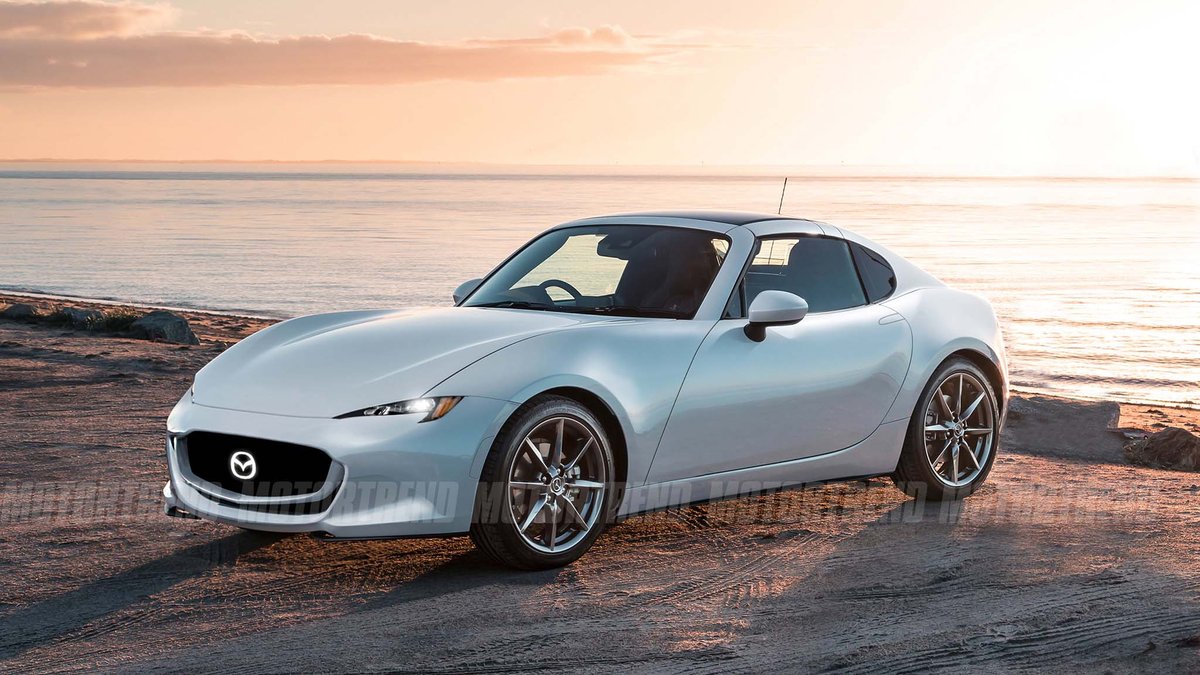
- MX-5 RF (Retractable Fastback): Introduced in 2017, the RF offers a stunning targa-top-like design with a fastback silhouette when the roof is closed, providing a unique alternative to the traditional soft top.
Notable Trims & Special Editions:
- Sport: The purest, lightest experience, focusing on essential driving dynamics.
- Club: Adds performance upgrades like a limited-slip differential, sport-tuned suspension (often Bilstein dampers), and upgraded interior accents.
- Grand Touring: Offers luxury amenities such as leather seats, automatic climate control, and advanced driver assistance features.
- 30th Anniversary Edition Miata: A vibrant orange special edition celebrating three decades of the Miata legend.
The Miata's Enduring Engineering Philosophy: More Than Just Specs
Across all four Miata generations, Mazda's dedication to its core principles has been unwavering. This consistency is why the Miata remains a benchmark for driver-focused cars.
Technology that Enhances, Not Dominates
While each generation has embraced modern technology, it's always been in service of the driving experience. Revised chassis designs, lightweight materials, and enhanced suspension systems improve performance and safety. Even advanced driver assistance systems (ADAS) like adaptive cruise control or active lane-keeping are integrated to complement, not overshadow, the driver's connection to the road. The goal is to make the car more capable and secure, allowing the driver to focus on the joy of motion.
Performance: Power-to-Weight Prowess
The Miata has never been about headline horsepower figures. Its performance comes from an expertly crafted power-to-weight ratio, significant steering responses, secure chassis behaviors, and refined suspension tuning. The advanced rear-wheel-drive layout provides balanced dynamics, making it incredibly predictable and fun to push to its limits. This engineering excellence is a key reason for the Miata's legendary handling.
Aesthetics: Timeless Roadster Silhouettes
From the charmingly retro NA to the sleek, aggressive ND, every Miata generation shares a recognizable roadster silhouette. The evolution has seen modernized infotainment, streamlined ergonomic driver layouts, and a continuous homage to the simple yet elegant design of classic British roadsters. It’s a design that ages gracefully, always looking right at home on a winding back road.
Beyond the Pavement: Miata's Cultural Impact
The Miata's influence extends far beyond the showroom floor. It's a car that inspires communities, appears in pop culture, and dominates certain corners of motorsports.
A Media Darling and Symbol of Freedom
The Miata has popped up in various films, TV shows, and countless online features. Its image is often associated with adventure, freedom, and a youthful spirit. Think of its appearances in films like Thelma & Louise, symbolizing escape and open roads, or countless music videos and commercials. It’s a car that tells a story of personal liberation.
Thriving Online Communities
Few cars boast such a passionate and active owner base. Online communities on platforms like Reddit (r/Miata is huge!), Instagram, and dedicated forums foster deep engagement. Owners share tips, show off modifications, organize meetups, and generally celebrate their shared love for the car. This vibrant community is a testament to the Miata’s ability to forge connections not just between driver and car, but between drivers themselves.
Motorsports: The Spec Miata Phenomenon
Perhaps nowhere is the Miata's performance pedigree more evident than in motorsports, particularly the Spec Miata series. This racing class is renowned for its affordability, nimbleness, balanced weight distribution, and responsive handling. It provides an accessible entry point into competitive racing, emphasizing driver skill development over sheer horsepower. Spec Miata has become a proving ground for aspiring racers, solidifying the car's reputation as a serious, yet approachable, track machine.
Keeping Your Miata Alive: Maintenance & Longevity
One of the Miata's unsung strengths is its remarkable reliability. While it’s a sports car, it doesn't come with the temperamental nature often associated with them.
Routine Upkeep is Key
To ensure your Miata continues to deliver smiles for years to come, regular upkeep is crucial. This includes routine checks (fluids, tires, brakes), adherence to service intervals, and basic component inspection. The simplicity of the Miata's design often makes DIY maintenance more accessible, fostering an even deeper bond between owner and machine. Seasonal maintenance, especially for convertibles, is also important to protect the soft top and interior from the elements.
The Road Ahead: What's Next for the Miata?
As the automotive world pivots towards electrification and connectivity, what does the future hold for an icon celebrated for its analogue purity? Mazda is acutely aware of the Miata's heritage and its loyal fanbase.
Embracing Technological Advancements
Future Miatas will likely feature continued advancements in Skyactiv Technology, pushing the boundaries of internal combustion efficiency while potentially exploring hybrid systems. Electric powertrains are a possibility, but Mazda would need to overcome significant challenges, primarily battery weight, to maintain the Miata's core lightweight design. Smart features like V2X communication and more advanced ADAS will likely evolve, further enhancing safety and convenience without diluting the driving experience. Weight reduction strategies, employing advanced materials like carbon fiber and high-strength steel, will remain a priority.
Environmental Responsibility
Mazda is committed to sustainable manufacturing practices, focusing on resource conservation, waste reduction, and the use of eco-friendly materials. For the Miata, this could mean not just greener powertrains but also an emphasis on the longevity of modifications and parts, aligning with long-term sustainability goals. The aim will be to ensure the Miata remains a relevant and responsible choice for drivers in a changing world.
The Mazda Miata remains an automotive icon, blending thrilling performance, timeless design, surprising accessibility, and profound cultural relevance. As it continuously adapts to market demands, it steadfastly preserves its core identity as the quintessential roadster, proving that some joys are simply too good to let fade away.